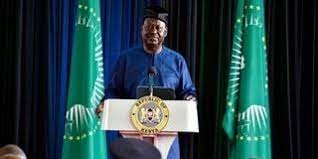


Kenya’s former Prime Minister Raila Odinga takes the stage to debate Djibouti’s Foreign Minister Mahmoud Ali Youssouf and Madagascar’s former Foreign Minister Richard James Randriamandrato.
There could never be a better that is more poised, seasoned and hardened for African Chairman than Raila Amolo Odinga aka Baba.
The African Union, as part of its reforms, launched the debate – dubbed Mjadala Afrika – in 2017 to allow candidates to respond to moderated questions as well as defend their vision before an African audience. The idea, the AU argued, was to bring the leadership of the continental bloc closer to the people and remove the wall of secrecy that has barricaded the organisation for years.
Yet, this will only be the second time such a debate has happened in seven years, a result of a single candidate competing for re-election in 2021: Moussa Faki Mahamat of Chad.
The debate, AU says, will provide a vital platform for candidates to discuss their visions and proposals for addressing the continent’s most pressing challenges.
“I want to thank all those members who voted for me. I also want to thank those who did not vote for me because, in doing so, they exercised their democratic rights,” he said.
Political maneuvers
In 1997 Odinga stood unsuccessfully as the NDP’s candidate for election as president of Kenya but was able to retain his seat in the National Assembly. He and the NDP thereafter gave their support to Moi and the ruling Kikuyu-dominated Kenya African National Union (KANU). Odinga joined Moi’s cabinet as energy minister in 2001, and the NDP was absorbed into the ruling party the following year, with Odinga becoming secretary-general of KANU.
Odinga’s hope of succeeding Moi as KANU’s candidate for the presidency in the 2002 elections was shattered when Moi called upon the party to support Uhuru Kenyatta, son of former president Jomo Kenyatta. Several KANU members, including Odinga, formed the Rainbow Alliance within the party in protest of the choice, and they instead advocated for a vote among KANU members to determine the party’s presidential candidate. Their pleas went unheeded, and KANU officially named Kenyatta as its candidate a few months later; in response, Odinga and the Rainbow Alliance left KANU and formed the Liberal Democratic Party (LDP).


